
Why Do I Always Feel Like Something Bad Is Going To Happen?

Have you ever had the feeling that something bad is going to happen even when everything around you seems fine? You may know there is no immediate danger, yet part of you stays alert—watching, listening, noticing changes, and preparing just in case. For people who have experienced trauma, that feeling may not simply be negative thinking. Sometimes the nervous system has learned from experience that life can change without warning. In Emma's story, she begins to understand why her mind keeps watching the horizon for a storm, even on days when the sky appears clear.
Why Do I Always Feel Like Something Bad Is Going to Happen?

It was Wednesday morning.
Emma unlocked the greenhouse just after sunrise.
The air smelled fresh.
The flowers had just been watered.
Soft sunlight streamed through the glass ceiling.
It looked like it was going to be a beautiful day.

As she arranged a display of flowering plants...
She noticed something familiar.
Her eyes drifted toward the parking lot.
Then toward the entrance.
Then toward the road.
Almost as if...
She were waiting for something

Nothing unusual was happening.
Customers smiled.
Employees joked with one another.
Birds chirped outside.
Yet somewhere inside...
Emma couldn't quite relax.

The feeling wasn't panic.
It was quieter than that.
More like...
A constant readiness.
As though life might suddenly change...
At any moment.

Driving home that afternoon...
She caught herself checking her mirrors again.
Looking farther down the road than she needed to.
Listening carefully to every unexpected sound.
She sighed.
"Why do I always feel like something bad could happen?"

She didn't want to think that way.
She wasn't trying to be negative.
She simply couldn't shake the feeling...
That she should always stay prepared.
Just in case.
How Past Trauma Can Make Your Nervous System Expect Danger

A few days later...
Dark clouds gathered over Wilmington.
The local weather station interrupted the radio.
"Strong thunderstorms are expected this afternoon."
Emma immediately paid attention.

She remembered a storm years earlier.
One that had caused serious damage.
Fallen trees.
Power outages.
Shattered windows.
Ever since then...
Storm warnings had felt different.
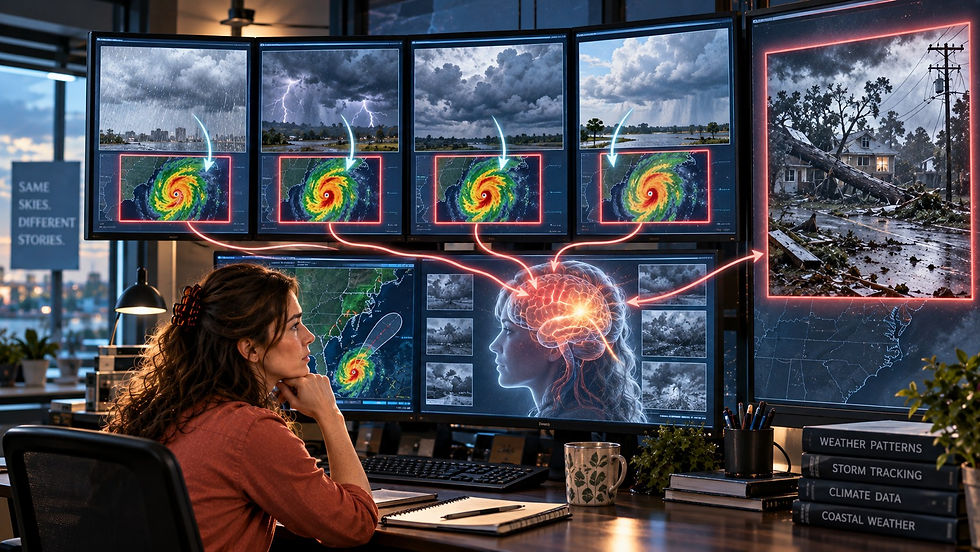
Most thunderstorms came and went without much trouble.
But her mind...
Still treated each one...
As though it might become the worst one.

Trauma can sometimes affect our nervous system that way.
When something frightening has happened before...
Part of the brain begins watching closely...
For signs it could happen again.

That doesn't mean...
You believe disaster is certain.
It means...
Your nervous system has learned...
That danger can arrive without much warning.
So it keeps scanning...
Trying to protect you.

People looking at Emma...
Saw someone who seemed cautious.
Responsible.
Prepared.
They couldn't see...
The quiet weather forecaster inside her...
Always watching the horizon...
For the next storm.

For a long time...
Emma believed she was simply becoming a pessimistic person.
But maybe...
She wasn't expecting bad things because she wanted to.
Maybe...
Her nervous system had learned...
That expecting the worst...
Felt safer than being surprised again.
Learning to Notice What Is Actually Happening Right Now
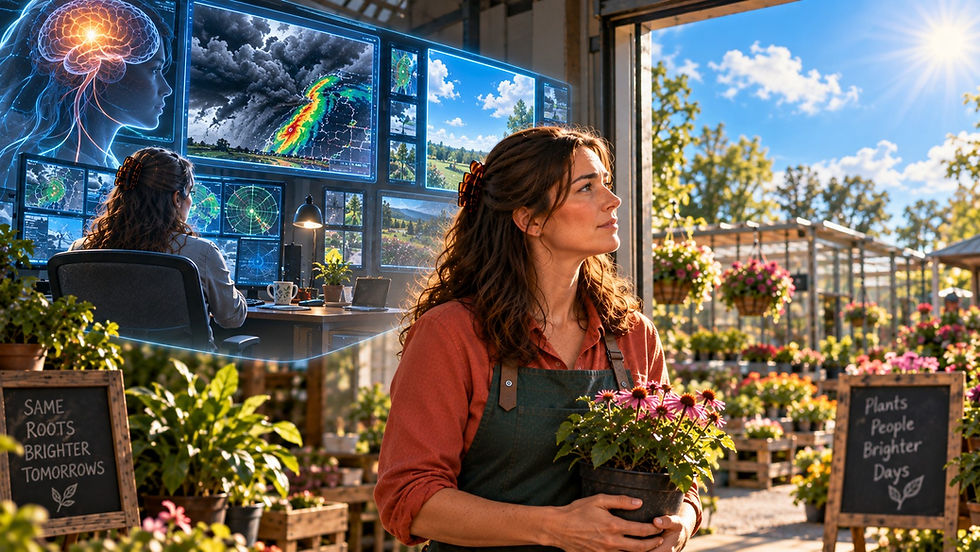
That realization softened something inside her.
She didn't have to argue with every fearful thought.
She could simply notice it.
"My nervous system thinks a storm may be coming."
"But I can also look around..."
"And notice today's weather."
Sometimes...
The sky really was clear.

Healing didn't begin the day Emma stopped noticing dark clouds.
She still paid attention.
Healing began the day she stopped assuming...
Every cloud...
Meant another storm.
Little by little...
Her nervous system began collecting evidence...
Of ordinary days.
Safe conversations.
Peaceful mornings.
Routine afternoons.
And she discovered something she wished someone had told her years earlier...
The weather forecaster inside her...
Didn't need to disappear.
It simply needed to learn...
That not every forecast...
Becomes reality.
And not every cloudy sky...
Ends in a storm.
Understanding Trauma, Hypervigilance, and the Fear That Something Bad Will Happen

After something frightening or destabilizing happens, the nervous system can become especially attentive to anything that resembles the beginning of what happened before. That doesn't necessarily mean you consciously believe another crisis is coming. Your mind may know that today is different while another protective layer of your system remains alert for the earliest signs of change. What feels like pessimism may sometimes be a nervous system trying to make sure it is never caught completely unprepared again.

This can help explain why telling yourself “Stop being so negative” often doesn't resolve the feeling. The nervous system may not be trying to make an accurate prediction about the future. It may be trying to reduce the possibility of being surprised. Preparing for the worst can create a temporary sense of control: If I anticipate it, maybe I can protect myself from it. Understanding that protective logic creates room for a different question—not “Why am I so pessimistic?” but “What does part of me believe being prepared will protect me from?” This is the central shift the script makes when Emma realizes that expecting the worst may feel safer than being surprised again.

Healing doesn't require erasing the experiences that taught your nervous system to watch for danger. Those experiences remain part of your history. What can change is the amount of information your system has available when it interprets the present. Every ordinary afternoon, safe interaction, unexpected sound that ends safely, an uncertain moment that doesn't become a crisis becomes another piece of evidence. Over time, the nervous system isn't being taught that danger is impossible. It's gaining a larger and more accurate history from which to forecast: sometimes clouds really are just clouds.
If you often feel as though something bad is about to happen, the goal does not have to be convincing yourself that nothing bad will ever happen. It may begin with understanding why your nervous system learned to stay prepared—and helping it gradually recognize the difference between danger remembered from the past and what is happening in the present. With new experiences of safety, the internal forecast can change without erasing what happened before.
If past experiences continue to leave you feeling watchful, on guard, or unable to fully settle, learn more about how our Trauma Therapy Services can help you understand these protective responses and begin building a greater sense of safety in the present.


Comments